EDDM vs Targeted Lists: What to Choose
Summary
Best for: local businesses choosing between broad coverage and precision targeting Fastest win: match your offer type to the right delivery model before you launch Simple rule: awareness and saturation favor EDDM; efficiency and fit favor targeted lists
If you’re sending postcards, the biggest decision isn’t the design — it’s how you pick who receives it. The two most common approaches are:
- EDDM (Every Door Direct Mail): mail to every address on specific USPS carrier routes.
- Targeted lists: mail to a curated list of addresses that match your ideal customer.
This guide compares both in plain English so you can pick confidently.
Summary
Choose EDDM if: you want maximum neighborhood coverage fast, you sell to “almost everyone,” and you don’t need pinpoint targeting.
Choose targeted lists if: you want higher-quality leads, you have a clear ideal customer, or you need to avoid wasting mail.
A simple rule: - Awareness & saturation → EDDM - Precision & efficiency → Targeted lists
The quick difference
EDDM (Every Door Direct Mail)
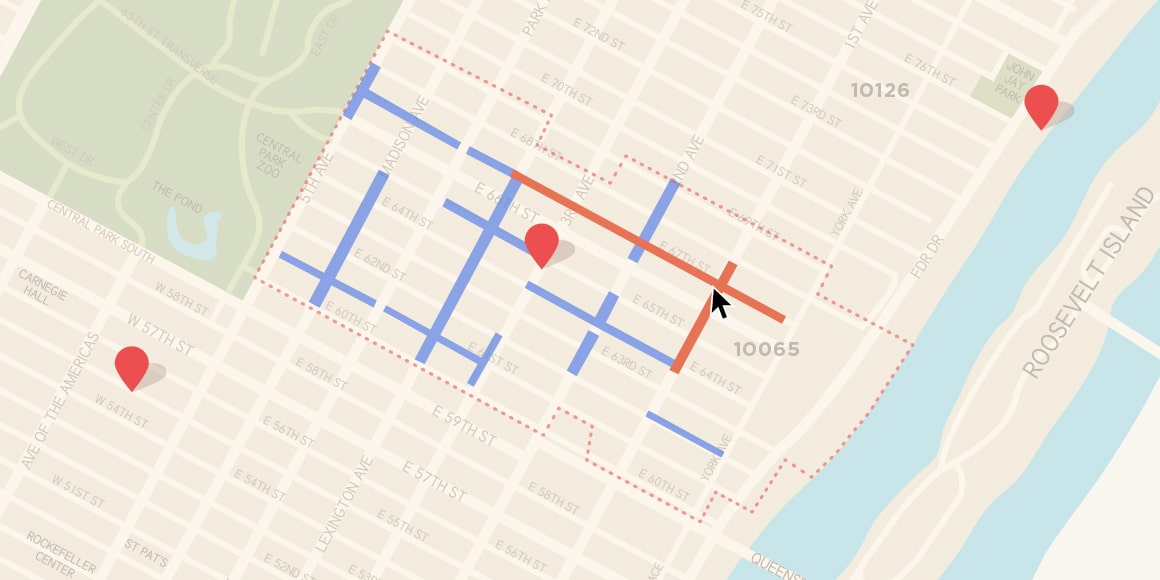
You select a neighborhood area by carrier routes, and USPS delivers your postcards to every eligible mailbox on those routes.
Think: “Blanket the neighborhood.”
Targeted Lists
You send postcards to a specific set of addresses that match criteria (homeowner, income range, property type, move date, etc.) or your own customer/prospect list.
Think: “Mail only to people who are most likely to buy.”
Side-by-side comparison
| Category | EDDM (Every Door Direct Mail) | Targeted Lists |
|---|---|---|
| Targeting accuracy | Low–Medium — great for broad audiences; not ideal for narrow niches. | High — best when your offer fits a specific customer type. |
| Waste vs efficiency | More waste, more reach — you’ll mail to some people who won’t need you. | Less waste, more efficiency — fewer homes, higher likelihood of response. |
| Cost structure | Often better per-piece at scale. No purchased list cost. | You pay for selection quality. Cost varies by criteria + volume. |
| Best offers | Intro offers, seasonal services, universal CTAs, brand visibility. | Higher-ticket services, property-specific offers, segmented messaging. |
| Speed & simplicity | Simple — pick routes → quantity → mail. | More setup — define ideal customer → choose criteria → build list. |
When to choose EDDM
Choose EDDM if most of these are true:
- You serve a local area and want broad neighborhood exposure
- Your service applies to most households
- You want to “own” a neighborhood through repeated visibility
- You’re early-stage and need awareness quickly
- You can commit to multiple mail drops to improve recognition
Great for: restaurants, salons, gyms, general home services, local retail, new business announcements.
When to choose a targeted list
Choose a targeted list if most of these are true:
- You have a clear “best customer” profile
- Your service is higher value or has a narrower audience
- You want better response rates from a smaller send
- You need to avoid renters, target homeowners, target certain property values, etc.
- You want to test messaging and measure results more precisely
Great for: roofing, remodelers, solar, pest control, HVAC replacement, home improvement specialists, real estate teams.
The “hybrid” strategy that often wins
Many businesses do best with both:
1) Use EDDM to build awareness in a core service area
2) Use targeted lists to focus on “best-fit” customers and higher-value jobs
3) Keep your branding consistent across both, so repeated exposure compounds
Final Recommendation
Choose EDDM for coverage and targeted lists for precision.
Start simple:
- Step 1Use EDDM when most homes nearby could be customers
- Step 2Use targeted lists when property type or customer fit matters more
- Step 3Match the mailing method to the offer before designing the card
Share your business type and target area, and we can suggest a focused next campaign.
Explore Neighborhood Postcards