How EDDM Works: A Plain-English Overview
Summary
What it is: mail to every eligible address on chosen USPS carrier routes.
Best for: local businesses that want neighborhood visibility fast.
Simple rule: EDDM is about coverage + repetition, not perfect targeting.
EDDM (Every Door Direct Mail) is a USPS program that lets you mail postcards to every mailbox on specific postal carrier routes — without needing to buy or upload an address list.
What EDDM is (and what it isn’t)
EDDM is:
- A way to choose an area by USPS carrier routes
- A way to reach most homes and businesses in that area
- Great for building awareness in neighborhoods you serve
EDDM is not:
- A “perfect targeting” tool (it doesn’t pick only homeowners, income levels, etc.)
- A guarantee that every single address gets it (some addresses may be excluded by USPS rules)
- The best fit for super-niche audiences
If your customer is “almost anyone nearby,” EDDM usually makes sense.
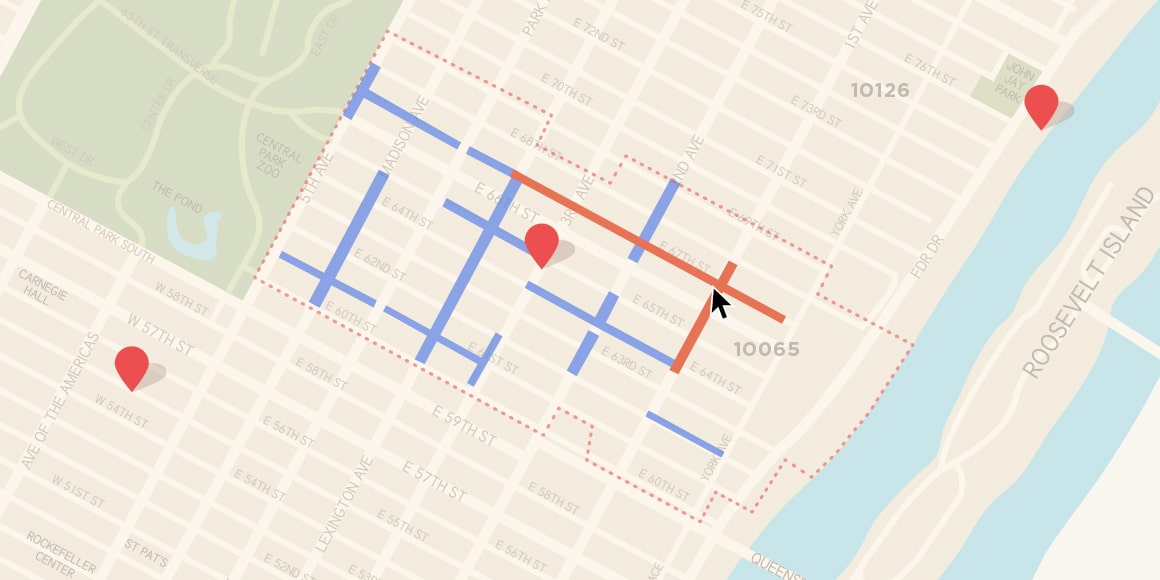
How targeting works in EDDM
Instead of selecting individual addresses, you select: - a city/ZIP area - one or more USPS carrier routes (the routes mail carriers drive/walk)
Each route has an estimated number of deliveries (households + some businesses). When you choose routes, you’re choosing coverage zones.
| Targeting method | What you choose | Best for |
|---|---|---|
| EDDM | Carrier routes | Neighborhood coverage and visibility |
| Targeted list | Individual addresses that meet criteria | Precision and efficiency |
The basic EDDM process
At a high level, EDDM looks like this:
- Pick your area (the neighborhoods you want to reach)
- Choose carrier routes (the coverage zones)
- Pick your postcard size and quantity
- Create your postcard design
- USPS delivers to addresses on those routes
choose routes + message + offer.
USPS’s job: deliver to the selected routes.
When EDDM is a great choice
EDDM is usually a good fit when: - you sell locally and want broad neighborhood exposure - your service applies to most households - you want to “own” a neighborhood with repeated mailings - you want to avoid the complexity of address lists
Common examples: - restaurants, gyms, salons - lawn care, pest control, cleaning - local home services (plumbing, HVAC, roofing—especially after storms) - real estate “just sold” visibility campaigns
When you should consider targeted lists instead
A targeted list may be better when: - your ideal customer is narrow (only certain property types, only homeowners, etc.) - you’re selling a higher-ticket or premium service and want efficiency - you need to filter out renters or focus on certain neighborhoods precisely - you want different messages to different segments
A simple way to think about it:
- Awareness & saturation → EDDM
- Precision & efficiency → Targeted lists
What to put on an EDDM postcard
Because EDDM is broad, your message should be broad and clear.
A simple EDDM checklist
- One headline that’s instantly clear
- One offer (free estimate / new customer special / limited-time deal)
- 2–4 trust points (local, licensed, reviews, guarantee)
- One CTA (call/text/QR)
Don’t over-explain. The postcard’s job is to start the conversation.
How many times should you mail?
EDDM tends to work better with repetition because recognition compounds.
| Goal | Recommended cadence |
|---|---|
| Quick burst (event, opening, seasonal) | 1–2 drops |
| Build neighborhood recognition | Every 3–4 weeks |
| “Own the neighborhood” strategy | 3–6 drops minimum |
Tracking EDDM results (simple)
Even though you’re not using a list, you can still track performance.
| Tracking method | Why it helps | Example |
|---|---|---|
| Dedicated phone number | Clean attribution | Unique number for that campaign |
| QR code | Easy mobile response | “Scan to claim offer” |
| Short URL | Easy typing | yourbiz.com/deal |
| Offer code | Simple tracking | “Mention EDDM10” |
You don’t need perfect analytics — you need a consistent way to tell what worked.
Final Recommendation
Use EDDM when neighborhood coverage matters more than perfect targeting.
Start simple:
- Step 1Choose routes where broad awareness makes sense
- Step 2Keep the offer simple enough for many households
- Step 3Repeat the same area so recognition has time to build
Share your business type and target area, and we can suggest a focused next campaign.
Explore Neighborhood Postcards